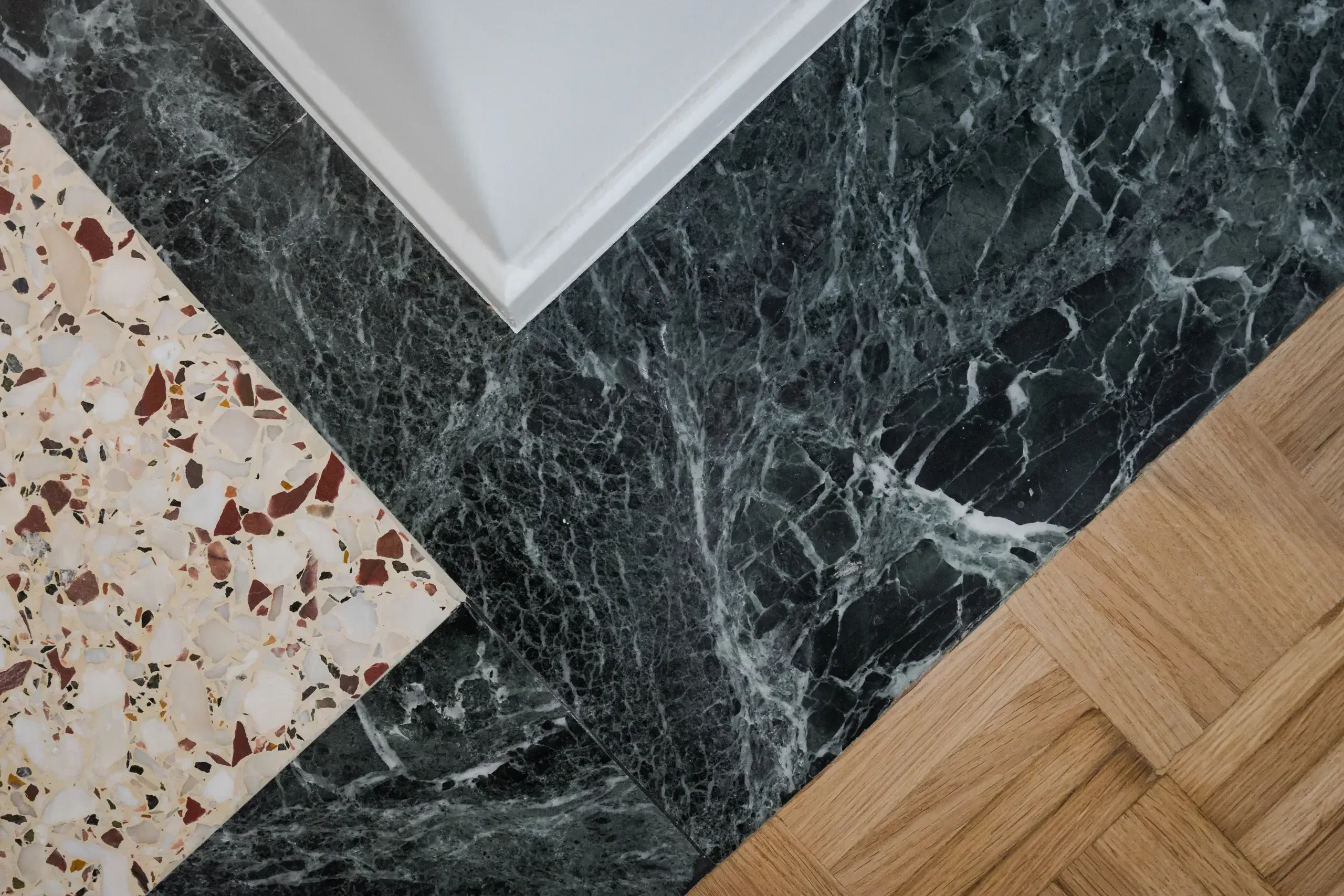
Why we always start by looking down.
Every time we take on an Athens apartment, we start with the floor. Before we measure, before we sketch, we want to know what is under the carpet, the laminate, the tiles laid in a hurry sometime in the nineties. More often than not, there is something worth keeping underneath.
The one place they spent the money
Athens apartments of the postwar decades were built fast and built lean. The polykatoikia was an exercise in economy: thin partitions, modest ceiling heights, joinery that was serviceable rather than special. But the floors were different. Floors were where the money went.
Marble was abundant and local, and the tradesmen who worked it were everywhere. Mosaiko, the poured terrazzo of the era, was ground and polished in situ by crews who did nothing else. So in buildings where almost everything was done to a price, the floors were done to a standard. Walk into an untouched apartment from the fifties or sixties and you will find marble thresholds, marble stair treads, and mosaiko floors with borders and inlays that no one would pay for today, because the craft to make them has mostly gone.
This is what fascinates us. In these apartments, the floor is often the only surface where real material and real skill were applied. It is the most honest record of what the building wanted to be.
What we found in Kolonaki
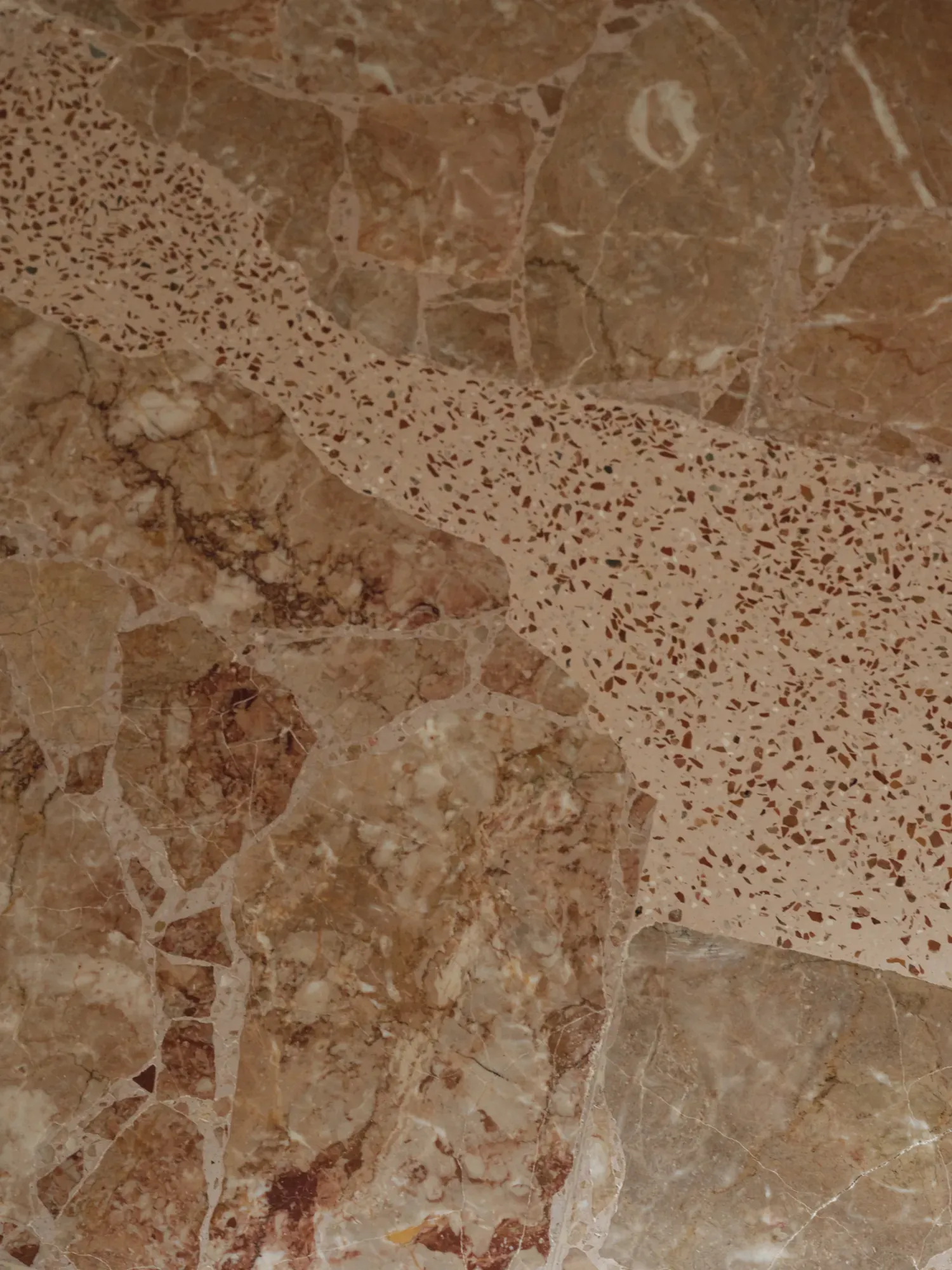
At our Kolonaki renovation, stripping out revealed the original floors beneath decades of later coverings. They were incomplete. Walls had moved, services had been cut through, and there were gaps where the original material had been lost.
The easy option was to take everything up and start again. Instead we kept what survived and infilled the gaps with new marble, letting the joins show. The floor now reads as what it is: an original surface, repaired. The new marble does not pretend to be old, and the old does not need to apologise for its scars.
What we found in Thiseio
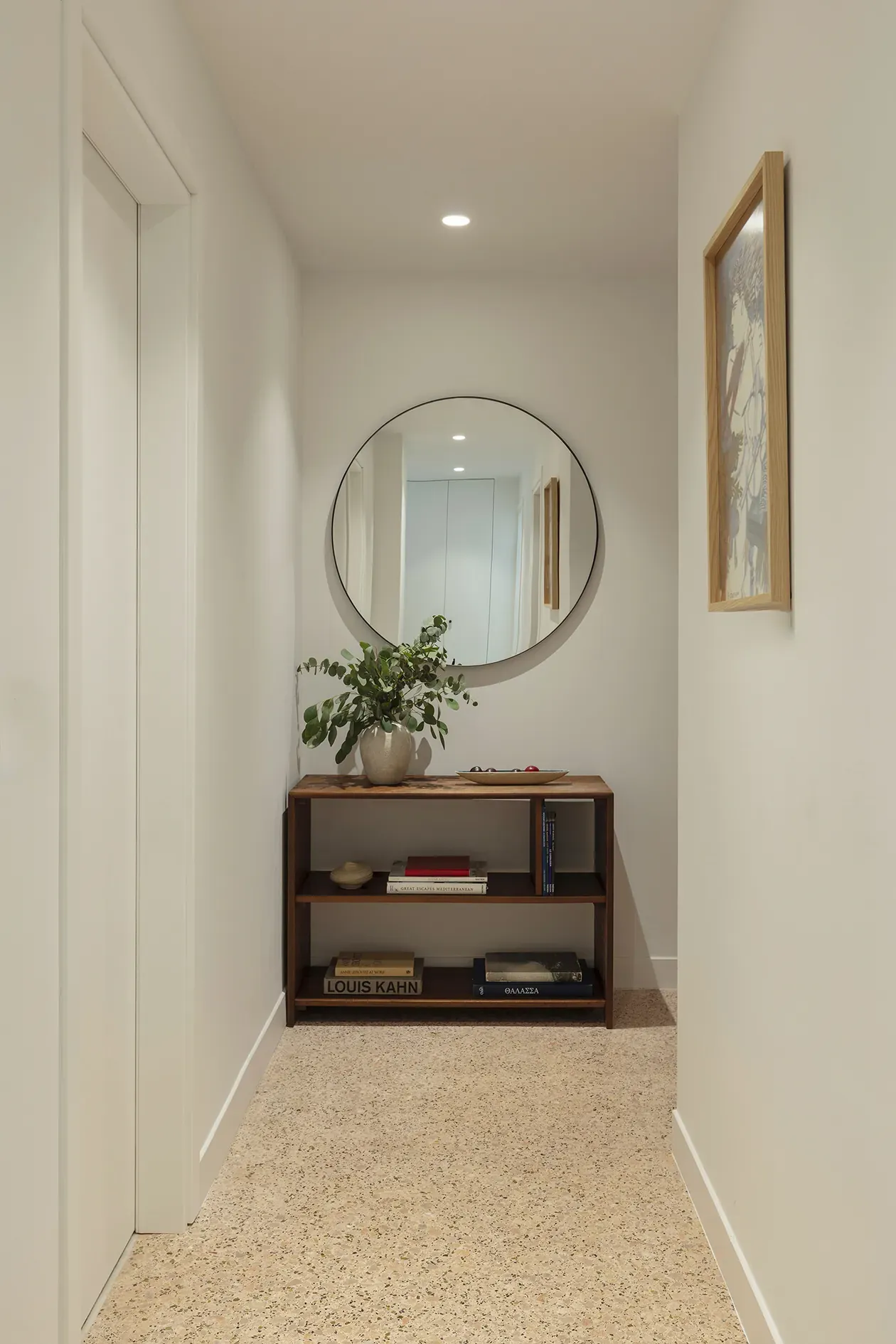
In Thiseio, a 1960s apartment a few minutes from the Acropolis, we went a step further. Again the existing floors came to light during the strip-out, and again they were fragmentary. Here we filled the gaps with terrazzo and palladiana, the technique of setting broken marble pieces into a poured ground. Some of that broken marble came from the works themselves, offcuts and debris that would otherwise have gone into a skip.
The result is a floor that carries its whole history in one surface: the original material, the interruptions, and a repair made from the leftovers of its own renovation.
Against papering over
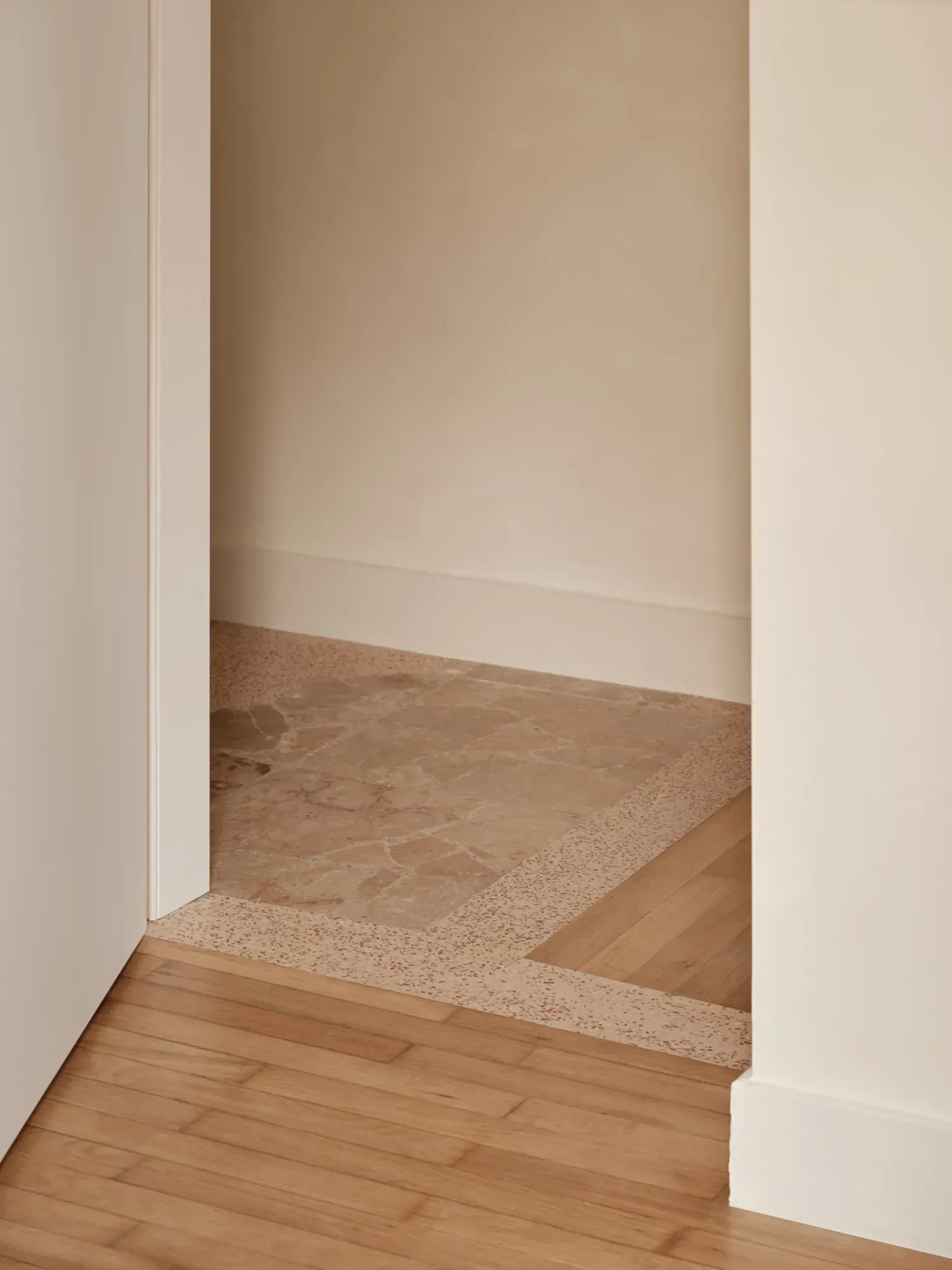
There is a version of every renovation where the past is simply covered up. Vinyl plank over mosaiko. Laminate over marble. It is quick, it is cheap, and it erases, in an afternoon, the one part of the apartment that was made with genuine care.
We think the better move is almost always the opposite. Uncover, repair, celebrate. Not out of nostalgia, but because these floors are usually the best material in the building, and because keeping them is the lowest-carbon decision available. The greenest floor is the one already there.
This is really how we think about all our work. Renovation, for us, is not about replacement. It is about finding the moments worth keeping, the surfaces where a building already shows its quality, and organising everything else around them. Sometimes that moment is a floor. Sometimes it is a wall of exposed brick, a marble sill, a timber door worth stripping back. But in Athens, more often than not, it starts underfoot.
If you are renovating an apartment in Athens and wondering what might be hiding under your floors, we would love to take a look.